
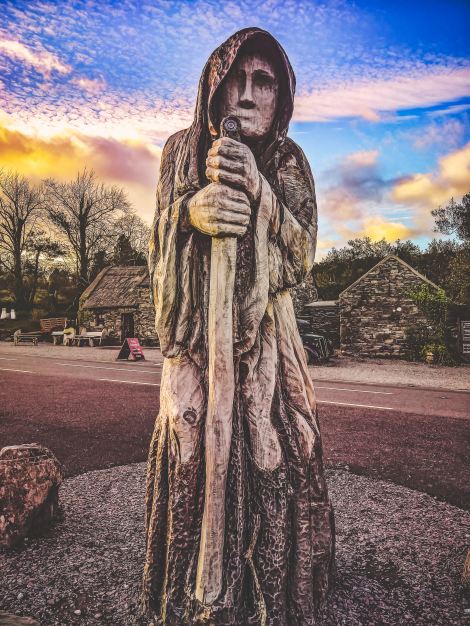
Crones, hags, witches, beldames, carlins, hellcats, shrews and goddesses. Elder woman have been named many things as they transition from fertility and journey through menopause.
Stories of mythic old women were told of a time when Earth was commonly represented as the body of a woman. Caves were though of as wombs, rivers as veins or the flow of life-giving milk, and hills were seen as breasts.
Elder women were revered – and sometimes feared. In particular, Hildegard of Bingen was also known as Saint Hildegard and was a German Benedictine abbess and polymath which was a term applied to people who had ‘learned much’.
She was a writer, composer, philosopher, mystic, visionary and a medical practitioner who was considered the founder of scientific natural history in Germany and was well known for her healing powers involving the practical application of tinctures and herbs.
From weight gain to hot flashes and night sweats, menopause can make life miserable for some women.
Each woman’s experience is uniquely individual. You may feel as if you are losing all sense of familiarity with your body as you follow a tumultuous roller coaster ride of physical, psychological and emotional awakenings.
Almost three-quarters of all menopausal women experience hot flushes. These are sudden temporary increases in body temperature due to falling oestrogen levels. The body’s temperature can raise several degrees in a very short period of time causing discomfort and heavy sweating.
Herbs such as sage, which have an oestrogenic effect in the body, have been used for centuries to manage hot flushes. A simple home remedy is to chop 6 fresh leaves and soak over night in lemon juice. This draws out the active constituents of the herb. In the morning, strain and drink the juice.
Seven to ten days of this mixture will usually control hot flushing and sweating. Every two weeks take a break from the mixture for seven days. Of course, if you are thinking of planting sage in your garden, be sure to choose the correct variety which has the medicinal properties, Salvia officinalis.
Including plenty of phytoestrogens in the diet which help alleviate many menopausal symptoms. Phytoestrogens are compounds found in food which have health benefits including the potential reduction in cardiovascular risks, possible protection against osteoporosis (bone loss), and alleviation of hot flushes.
Adding just 100g of tofu and 1 tablespoon of ground linseeds or linseed oil to the diet every day can reduce hot flushes and improve menopausal symptoms such as vaginal dryness as well as having a protective effect on bone density.
Some foods, such as coffee, spicy food and alcohol, seem to aggravate hot flushes and should be avoided. Drinking or eating foods which are extremely hot can also trigger hot flushes so simply eating foods at a lower temperature can help.
The herb Black cohosh (Actaea racemosa), a member of the buttercup family native to North America, contains a group of chemicals known as saponins, which have proved to be effective in treating hot flushes.
While it forms the basis of the herbal tablet ‘Remifemin’, Black cohosh, when used as a liquid tincture, is invaluable in making a woman’s cream to help treat menopausal symptoms.
Red clover (Trifolium pratense) was traditionally highly regarded as a cleansing medicinal herb, especially when chronic disease had set into the lungs or the skin. Russian folk healers and traditional Chinese physicians have long used red clover for asthma, bronchitis and to clear the lungs.
Red clover is considered to be one of the richest sources of isoflavones, which are water-soluble chemicals that act like oestrogens (known collectively as phytoestrogens).
Red clover can be used as a herbal medicine for hot flushes associated with menopause but is also beneficial in premenstrual tension and improving circulation of the blood, to help prevent osteoporosis, reduce the possibility of blood clots and arterial plaques.
Red clover may also help the functioning of the lymphatic system so is often used to ease sore throats, tonsillitis and swollen glands.
Menopause may have many negative social connotations as it is associated with growing older and a perceived loss of beauty and fertility. It is interesting to note that for many indigenous cultures there is no word for menopause, rather, it has positive connotations reflecting its natural process where a woman graciously becomes an elder and leader of their tribe.
 Herbal Health Waiheke