
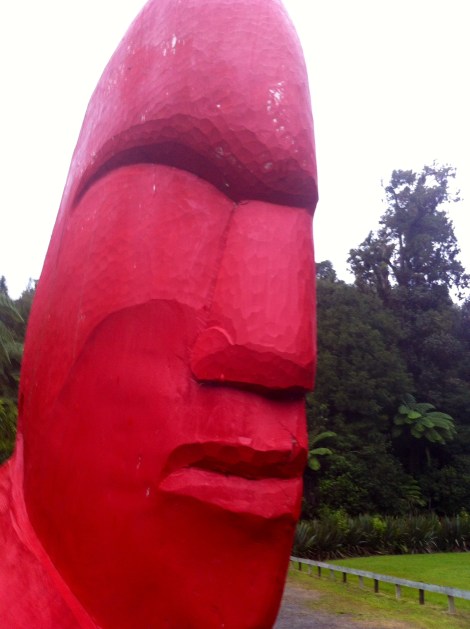
Te Werowero, Kauranga, Helen Elscot, 2019
Rongoā Māori is informed by a body of knowledge that has as its core the enhancement of Māori wellbeing. In this way, Rongoā Māori differs from a Western medical paradigm, whose focus is principally the absence of health and wellbeing and treatments and interventions to return to a state of health.
The Ministry of Health is supporting Māori traditional healing practitioners to support Rongoā Māori within the health and disability sector. For several years, the Ministry has discussed with Rongoā whānau – including traditional healers, Māori health providers and iwi – the role that traditional healing has with mainstream services.
The Tū Mai Rongoā Māori Symposium iwas held online on the 29th of June, 2022 and reflects a pivotal time in the recognition of the mana of Rongoā Māori by the health and disability sector in Aotearoa.
This online symposium was inspired through working with the Rongoā Māori community as part of a Health Research Council-funded project, Te Ao Rauropi: Mapping the Biosphere of Rongoā Māori.
The Ministry of Health, Accident Compensation Corporation, the interim Māori Health Authority, Whakauae Research Services and Rongoā communities have partnered to host and present the way that New Zealanders can share current perspectives on the place of Rongoā as a taonga tuku iho in our collective commitment to improve health equity for all New Zealanders.
Rongoā Māori is the Māori term for medicines that are produced from native plants in New Zealand. These medicines are often used to prevent sickness and they also provide remedies in times of ill-health.
The medical practitioners of Rongoā Māori, known as tohunga, passed their knowledge down through the generations and is still taught in communities today.
Getting to know the local plants which grow in the New Zealand bush – and possibly your back garden – can not only keep you and your family healthy, it could also save you money.
Tanekaha is a medium-sized, coniferous tree which grows to a height of almost twenty metres. Like the kauri tree, it sheds its lower branches, producing smooth, straight trunks and knot-free timber which is sought after for its strength.
Its common name, celery pine, refers to the leaf which closely resembles celery leaves and its found throughout the North Island and in the northern parts of Nelson and Marlborough, and many, right here on Waiheke.
Today the bark is used for its astringing properties, pulling tissues in the body together and speeding the healing of cuts and wounds. Invaluable in hard-to-treat skin infections, diarrhoea and irritable bowel syndrome it is also used to aid liver and digestive function.
Kanuka is another tree found commonly on Waiheke. Larger than the manuka tree, you can tell the difference between them by the leaves – kanuka leaves are much softer to touch and not prickly like manuka, giving rise to the alliteration, “kanuka kind, manuka mean”.
Another differentiation are the way the flowers grow. The small white kanuka flowers grow in clusters whereas the manuka flowers grow singly.
Drinking kanuka tea daily can help treat fungal infections. The leaves and the bark of this plant are used by the native, and endangered, Kakariki parakeets to rid themselves of parasites. Apart from ingesting the material, they also chew it, mix it with their natural oils and apply it to their feathers.
One of the most well-known, large trees growing in New Zealand, and also on the island, is the kahikatea.
The leaves were often used by Captain Cook instead of Rimu leaves to brew an anti-scurvy beer which indicates they are rich in vitamin C and topical applications of the bark were used to treat bruising.
Today the leaves and berries are used to treat chronic inflammatory conditions such as rheumatism, arthritis, sinusitis and urinary tract infections.
Getting back to nature and learning about the plants which around the island is a valuable lesson which can be passed down to future generations. A good way to start is buy a guide to native plants, get out and about with the family and see how many plants you can spot.
“Rongoā Māori is a taonga (gift). It is something that is highly valued, to be treasured, treated with the upmost care and respect.” (Quote from Pa Ropata, 2019).
 Herbal Health Waiheke