
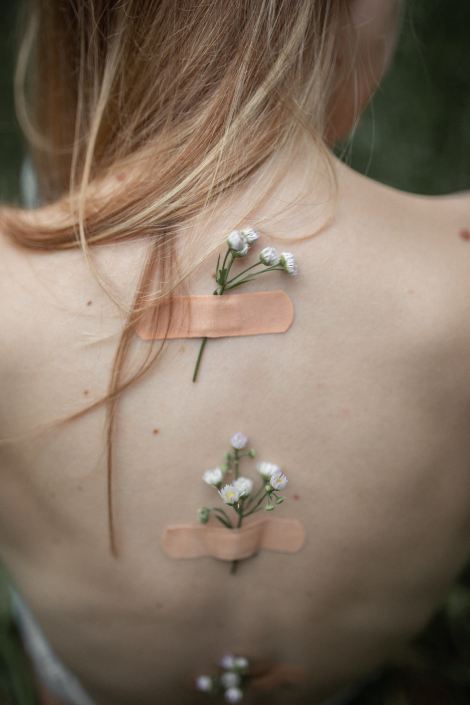
What happens if you need a Band-Aid for your insides? There are many occasions where you may get a nick or a scratch, or even a graze, inside your body. These wounds are usually found in the digestive tract, anywhere from your mouth to the south pole, if you get the drift.
Cavities, or openings, within the body are covered in what is called the mucous membrane which is made up from a thin layer of skin tissue, epithelial cells, which protect the body from pathogens and prevent the body tissues from becoming dehydrated by producing a thick protective fluid called mucous.
This mucous is similar to a Band-Aid, covering any wounds, protecting the area from infection and helping heal the membrane. When our bodies don’t produce enough mucous, it may mean that there is inflammation in the body that the body is unable to deal with.
Some herbal plants contain mucilage which is similar to our own bodies’ secretions. They are often also known as a demulcent (derived from the Latin demulcere, which means ‘to caress’) and can form a soothing layer over the lining of our digestive tract and organs protecting them from irritation, pain and inflammation.
When it comes to treating the inflammation and irritation of the digestive tract, a powder derived from the inner bark of the elm tree native to North America, is used internally to soothe and heal this delicate area.
Slippery elm powder’s main benefit lies in its easy to digest polysaccharides (long chains of carbohydrates) which form a gummy, slippery substance when mixed with water.
When taken as a drink, slippery elm forms a protective barrier through the entire digestive tract, healing ulceration and irritations easily and effectively.
Houhere (Hoheria populnea) is a fast-growing small tree belonging to a genus which is endemic to New Zealand. Its common name, lacebark, derives from its many lace-like layers of inner bark, which can be torn into ribbon-like strips.
The trees are popular for their attractive white flowers which appear in autumn. The fibre of the bark was once used for clothing, especially in summer as it is somewhat lighter than flax.
Today houhere is used medicinally to treat ulceration and inflammation in much the same way as slippery elm has been used and is rich in polysaccharides which are strong demulcents which form a protective layer on the delicate skin on the inside of the mouth when taken as a prescribed mouth rinse for ulcers.
There are many ways you can keep your internal organs happy and healthy. The daily use of marshmallow root as a herbal tonic, either powdered, in a herbal tea form or as a tincture, has shown to help soothe and the membranes of the kidneys, liver and pancreas.
The similarity in name between the herb marshmallow and the sweet treat is more than a coincidence, although the modern sugar puff ball no longer bears much relationship to the old-fashioned candy flavoured with marshmallow herb which has been used medicinally since ancient Greece.
Today it is used for its large sugar molecules, mucilage, which are thought to exert a soothing effect on mucous membranes in the body and helping ease the pain associated with organ inflammation.
Another remedy for digestive tract inflammation is one you can find in your pantry cupboard. Oats are rich in antioxidants as well as beta-glucan which helps speed up the skin’s own wound healing ability.
Oatmeal is an age-old home remedy for itchy, dry, or inflamed skin. Internally, the herbal tinctures of oats (Avena sativa) is used to soothe and calm the nervous systema and the plant is high in calcium, chromium, magnesium, Vitamin A, and various parts of the Vitamin B complex.
Simply take a handful of oatmeal, place it in a saucepan and simmer for 20 minutes. Strain the oat water – and eat the oats – and leave to cool. As a mouth rinse, swirl the oat water twice a day and spit out. Make a fresh oat water mouth rinse each day. This should not be used if you suffer from coeliac disease or have gluten sensitivities.
 Herbal Health Waiheke