
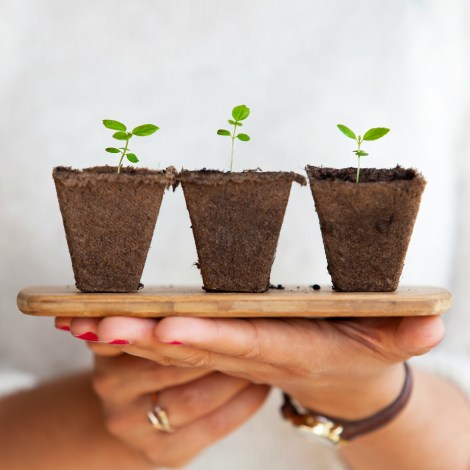
Why not become a naughty gardener? Littering has taken on a new twist with the trend of guerrilla gardening. Scattering seeds in neglected spaces brings beauty and greenery to these unexpected places as well as health benefits for all.
Sustainability has become such a buzz word, perhaps so overused that even the most diligent bees in our ecosystem, despite its significance in their world, might find it boring.
Splashed across marketing materials, casually tossed around in conversations, and strategically employed to secure funding from both corporate and government spheres, the term ‘sustainability’ has evolved into a universal emblem of corporate virtue worldwide.
Sustainability refers to the practice of meeting the needs of the present generation without compromising the ability of future generations to meet their own needs.
The Oxford Dictionary defines sustainability as, ‘the quality of being sustainable at a certain rate or level’.
Interestingly, for learners of the English language, The Oxford Learners’ Dictionary, sustainability is defined as, ‘the use of natural products and energy in a way that does not harm the environment’.
The Urban Dictionary pulls no punches in its explanation of sustainability. ‘The sustainability movement encompasses environmental justice and social justices because one cannot be obtained without the other. It means living life to the fullest without compromising future generations’ ability to do so.’
It offers a quick how-to-say-it-in -a -sentence as, ‘The sustainability revolution is beginning! Watch out you Styrofoam using, carbon cycle ignoring, TV worshipping members of consumer culture.’
Or you can also be referred to as sustainal. ‘Mike is soooo sustainal. He just criticised me for putting my banana peel in the wrong bin.’
While this all seems to be a little nit-picking, you can see sustainability happen right before your eyes. Nature does it. A flower which sprouts from long-forgotten bulbs sown at the wrong time or shrubs which flourish without ever having their seeds intentionally planted thanks to the seed-dispersal talents of our native bird.
Vegetables and fruits which were planted in the same planter box summers ago, may suddenly emerge, after their seeds were ‘lost’ when emptying and replanting the box, in a feat of endurance and survival of the fittest.
Seeds, in their simplicity, offer us the very essence of life’s building blocks. These tiny capsules hold the potential to sustain ecosystems, providing not only nourishment but also the continuity of diverse and thriving environments as well as giving us healthy options we can pluck directly from our gardens.
Calendula flowers are beautiful and easy to grow, even for beginners. It’s not at all fancy and will adapt to various soils and light conditions like a trooper.
After the flowers start to wilt, you will notice the seeds which look like big, gnarly crescent-shaped pods just above the stem. If you don’t want calendula to spread all over your garden, trim off the spent blooms (called deadheading) before they drop off and replant themselves.
They produce hundreds of seeds each year and the flowers’ bright-yellow faces not only make your garden attractive to bees, but the petals also (when infused in oil) can be used to help soothe the itch of eczema.
To make your own calendula oil, pluck the petals from the calendula flower and leave in a warm, sunny space to dry which could take a couple of days. Find a clean jar, pack it with dried petals and fill to the top with vegetable oil making sure all the petals are submerged.
Screw the lid on and leave to three to four weeks and watch the oil change to a brilliant golden colour. Strain the oil and use on patches of eczema to boost healing and relieve itchiness.
Nasturtiums are green lily-looking plants which are easy to grow. If you want to add nasturtiums to your own garden, find a patch in your neighbourhood, pluck the large nut-like green seeds (you will see them in late summer), let them dry and go brown and then plant them. Fortunately, they like any type of soil and you don’t have to be particularly green-fingered to look after them.
They have an ocean of brightly-coloured blossoms. In addition to the more traditional hues of bright yellow and orange, the range of colours that are available these days is exciting.
“Empress of India” have brilliant vermilion red blooms; “Whirlybird” showcases shades of tangerine, soft salmon, deep mahogany and cherry rose; “Peach Melba” are the colour of a cut white peach with an accent of raspberry in the throat and “Butter Cream” gives off soft cream toned colours in delicate double flowers.
The leaves and flowers of nasturtiums are packed full of zingy vitamin C and it has a peppery taste a little like watercress and can be used in the same way.
A really naughty way of spreading the health benefits of calendula or nasturtium is to use your excess seeds on your walks around the neighbourhood with your plus one or furry friend and scattering them as you go. Your streets will be paved with gold (or a riot of posh colours) next spring with your sustainable guerilla gardening.
 Herbal Health Waiheke