
Rather than commencing with the usual phrase “Once Upon a Time,” numerous Korean folk tales unfolded with the intriguing start, “Back when tigers used to smoke.”
Of course, tigers don’t smoke. They never have. It’s just a whimsical and imaginative way to start a story to set the tone for a fantastical narrative and a time in the distant past when mythical or extraordinary events might have taken place.
In Korean culture, elderly women are often respectfully referred to as “halmeoni” which translates to “grandmother” or “old lady” were usually the teller of these tales. This term is used to convey warmth and reverence towards older women in the community.
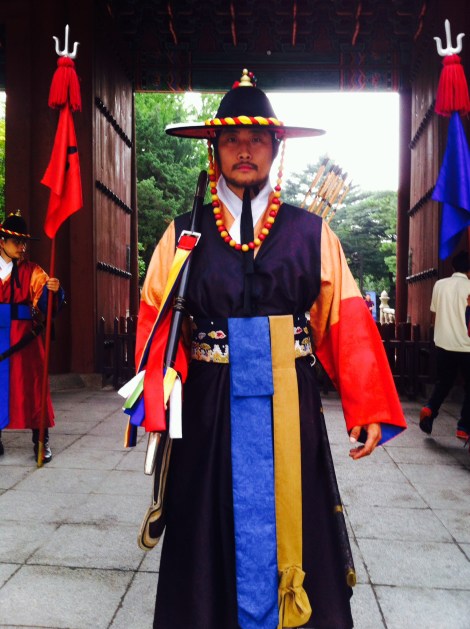
You can see both the elderly and young woman of Korea dressed proudly adorned in their traditional attire, called “hanbok” walking on the streets of Seoul. This is a distinctive and elegant outfit characterised by vibrant colors, graceful lines, and unique designs. It is often worn on special occasions, ceremonies, and cultural events, reflecting the rich cultural heritage of Korea.
Don’t be surprised to see hanbok outfits at the yakchosijang (herbal medicine market) where they buy traditional Korean medicine for their families under the guidance of their hanuisa (Herbal Doctor).
These traditional markets are stacked with baskets loads of dried centipedes, deer antlers, and desiccated frogs, a distinctly different world compared to our local district health boards, medical centres and hospitals.
Within this assortment of unusual medicinal treasures, Korean ginseng (Panax ginseng) sits pride of place. Whole, fresh roots gracefully reside in expansive glass jars of tincture and meticulously packaged specimens adorned in shiny gold and red packaging are stacked carefully on shelves.
Dried and powdered ginseng, intricately rolled into petite spheres and adorned with gold leaf, are housed precisely in ornate wooden boxes.
Koreans use their ginseng as a medicine to promote overall health, boost energy and enhance vitality. It is also used as a food in preparations such as soups, noodles, and chicken dishes alongside honey to impart its flavour and health benefits. It is also used in skin care products for its antixodant properties.
Ginseng contains ginsenosides which are a group of steroid-like compounds specific to the Panax genus, which also includes Siberian ginseng and American ginseng. These compounds are often considered the primary active ingredient in ginseng and are currently being studied for the effect on relieving the inflammation associated with rheumatoid arthritis.
A 2023 study by a collaboration of fifteen different universities in China found that gut dybiosis was closely linked to the progress of rheumatoid arthritis and that ginseng may have the ability to produce prebiotic and probiotic organisms via its compound ginsenoside.
Of course, for most Koreans, food is also seen as having medicinal qualities. Kimchi is sliced cabbage, fermented with red chili sauce and anchovy paste. It is pungent, spicy, and sour. Koreans love it and eat it with every meal – usually on the side – though they also use it as an ingredient in countless other dishes.
Kimchi is symbolic of Korean culture: it’s a vivid red, strong, distinctive, and defiant. Some foreigners can’t stomach it, but if you can, you will earn the locals’ heartfelt respect.
At night you will see men coming out of norae bang (karaoke rooms) and staggering through the streets, laughing, singing and arguing after a night of soju, a clear, colourless distilled alcoholic beverage. Just be sure to avoid the puddles of reddish-vomit often left behind, which are also known as kimchi flowers.
And, yes, some Koreans do eat dog meat, despite some sporadic attempts by the government to shut down the boshingtang (dog meat soup) restaurants, to improve the country’s “international image.” Dog meat was mainly consumed during the summer and by men, who claim that it does wonders for stamina.
The Korean attitudes towards the consumption of dog meat have been changing and many people, particularly the younger Korean generations, view dogs as companion animals rather than as a food source. In 2018, a South Korean court ruled that it is illegal to kill dogs for meat, although it is still sometimes still found in the countryside away from the larger cities.
Medicine in Korea can be eye-opening. Koreans are passionate about their health – and everything they put into their mouths is understood to help or hinder them. Mind you, most Koreans don’t smoke, so tigers around the peninsula are safe to tell their folk tales again.
 Herbal Health Waiheke