
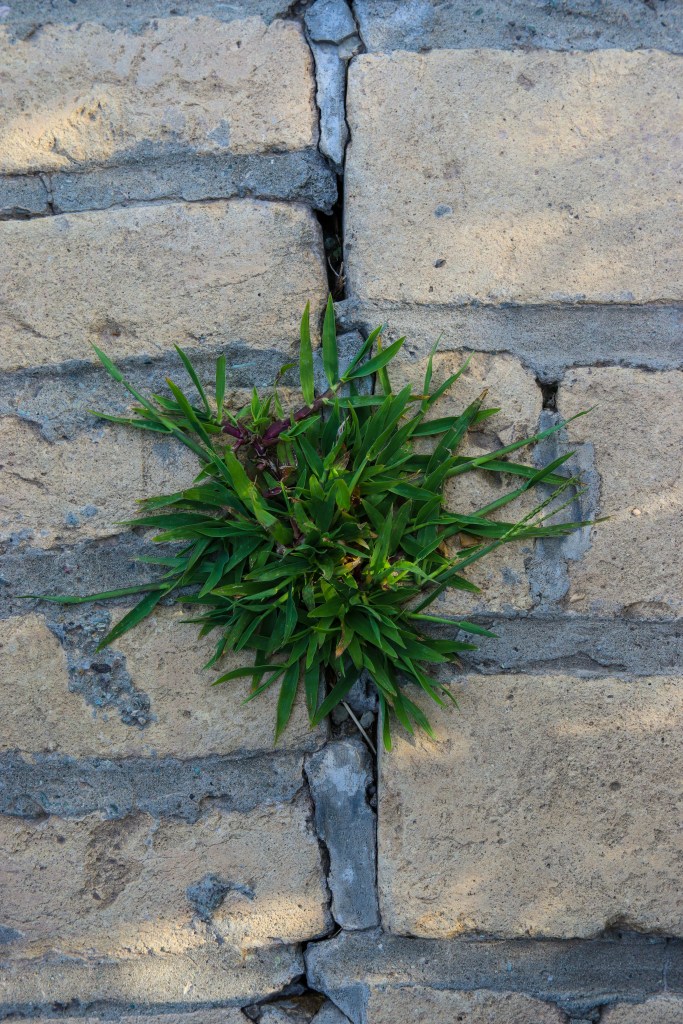
When you’re out on a daily walk, do you ever notice how small plants manage to grow through gravel, concrete, or rock without breaking?
Whether it’s between beach stones, along a gravel road, or in an inner-city alleyway, a patch of green can appear unexpectedly among the brickwork. From a tiny windblown seed, these plants find their way upward toward the light, producing leaves, flowers, and seeds of their own.
Along the way, they create valuable nutrients and compounds — a mix of minerals, antioxidants, and plant chemicals that support their growth and, in some cases, can also benefit human health.
Dandelions (Taraxacum officinale) are easily recognised by their ragged yellow flowers, which, once they fade, are replaced by spherical balls of fluffy seeds dispersed by the wind. Their leaves grow in a flat rosette, dark green with serrated edges, a shape reflected in the plant’s name, derived from the French dent-de-lion, meaning “lion’s tooth.”
The dandelion’s golden flower is often the first to appear through broken pavement or disturbed soil. Its deep taproot draws nutrients from the depths of the earth, supporting the liver and aiding detoxification. Tough, persistent, and bright, the dandelion demonstrates that renewal is always possible.
Nutritionally, dandelions are among the most valuable of wild greens. From root to flower, they are highly nutritious, packed with vitamins, minerals, and fibre.
The leaves can be eaten raw or cooked and provide excellent amounts of vitamins A, C, and K, along with vitamin E, folate, and small amounts of other B vitamins. They are also rich in minerals such as iron, calcium, magnesium, and potassium. Young leaves are milder and less bitter, which is why in Italy they are often harvested in early spring for use in fresh salads.
Gravel root (Eutrochium purpureum), also known as Sweet Joe Pye Weed, is a tall, herbaceous perennial in the sunflower family, native to the moist, gravelly meadows and stream banks of eastern and central North America.
Joe Pye was an indigenous American herbalist who used local plants to treat a variety of illnesses, including typhoid fever and kidney stones. For years, it was unclear if he was a real person or a botanical myth, until research confirmed that the plant’s name came from Joseph Shauquethqueat, a Mohican chief who lived in Massachusetts and New York in the 18th and early 19th centuries.
Standing at almost six feet tall, Gravel root produces clusters of small mauve-pink flowers in late summer, attracting pollinators like butterflies and bees. Its lance-shaped, serrated leaves grow in whorls along sturdy green stems with purplish nodes, giving the plant a distinctive appearance.
The name “Gravel root” reflects its traditional use in treating urinary gravel, small, hard deposits that form in the urinary tract. The root has been used for its diuretic properties, promoting increased urine production to flush out waste. This is beneficial for conditions such as urinary infections, kidney stones, and chronic joint pain, including gout. Gravel root has also been used to support the kidneys and bladder, easing symptoms such as painful urination.
Pellitory of the Wall (Parietaria officinalis) is a resilient perennial herb that often grows directly from the cracks of old stone or brick walls. Its Latin name reflects its habitat: paries means “wall,” and officinalis indicates its traditional medicinal use.
The plant has small, soft green leaves and inconspicuous greenish-white flowers. Thin, flexible stems cling to walls or rocky surfaces, forming mats that persist in shaded or semi-shaded locations where other plants struggle to survive.
Traditionally, Pellitory has been used to support urinary health as a gentle diuretic and kidney tonic. It has also been employed for mild inflammation and occasional support of the respiratory system. The leaves can be made into teas or tinctures, providing subtle but effective medicinal benefits.
Pellitory is highly resilient, thriving in nutrient-poor urban environments, and has a long history in European herbal medicine, often cultivated in monastery gardens or gathered by folk healers. Despite its small flowers, it plays a role in local ecology, offering nectar for visiting insects even in inner-city suburbs.
Some plants are born to endure. They rise through gravel, push past brick, and find their way through cracks in concrete — small, green testaments to the strength of life itself. Their quiet persistence is a reminder that growth and resilience often emerge from the most unexpected places.
 Herbal Health Waiheke